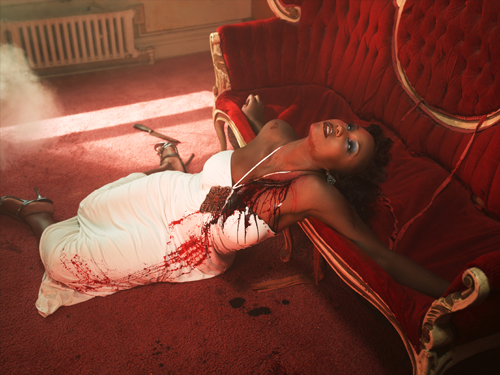
I call myself a ‘Mortician’ for want of a more succinct term in the UK for my profession, but the real job title is Anatomical Pathology Technologist. In my eight years assisting pathologists with autopsies (post-mortems) I saw every possible face of death, and none could really be considered ‘beautiful’. I looked upon death every day: some days with grim determination and a sense of duty to grieving families, but other days with a sense of horror or outrage at man’s inhumanity to man, or just their sheer bad luck. Some days I’d be sated with a valuable sense of being needed at this last point in a patient’s journey, other days I’d shower long and hard to remove death’s cold touch from my flesh, drink wine to remove death’s bitter aftertaste and wash my clothes twice to remove death’s hideous, cloying presence. So when I read this recent Guardian article on the trend for female ‘corpses’ in fashion photo shoots, I couldn’t help pondering the realism of these pictures and how far removed from death, as a society, we have become: perhaps it is this complete and utter detachment from our ultimate end which has caused photographers and film directors to idealise the corpse as much as artists did before them. Some of these pictures are serene while others depict a brutal beauty – but the reality is very different.
The Marc Jacobs shoot which begins the debate shows several women in a cadaveric repose in a desert, pale and slightly windswept with eyes half open.
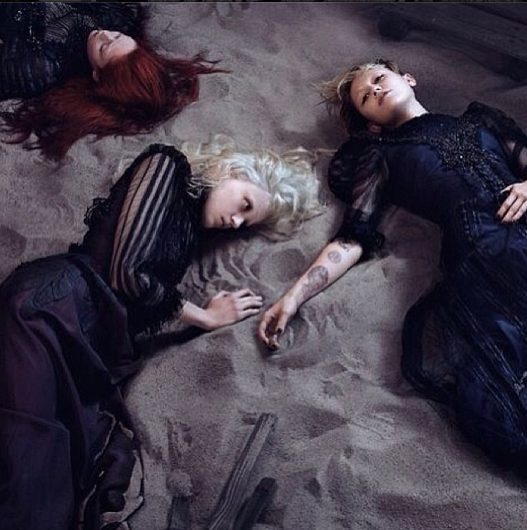
In reality, within a few hours, these open eyes would be covered in wind-blown sand. The skin would start to dessicate (rather than putrefy) due to the dry heat , leaving behind an egyptian-mummy like appearance: brown and leathery. Mouths too would slacken and gape open, filling with sand, and delicate fingers would become twisted and gnarled like twigs, the fingernails eventually being indistinguishable from the hardened skin around them. Mummification of a corpse in dry heat can occur in around two weeks and is much more common in thin individuals – like fashion models.
The Fall 1997 Prada shoot by Luchford (omitted from the aforementioned Guardian article) chose to symbolically depict corpse-like women.
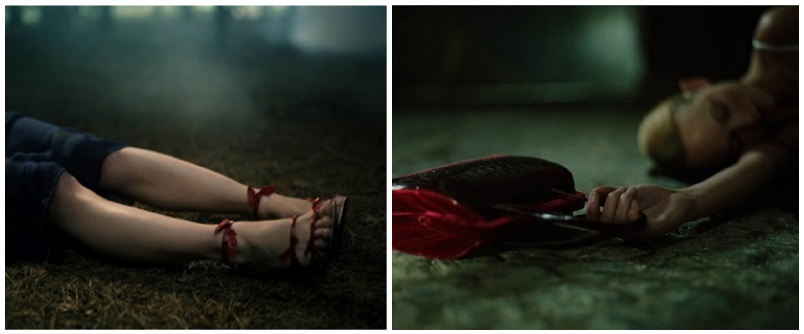
In this example, the model floats, corpse like, in water.

In reality her perfect lithe limbs would be bloated with gases which would pop under the fingers when pressed, rather like an extreme oedema – a phenomenon known as ‘crepitation’. She’d very probably be covered in an unsightly white substance known as ‘grave-wax’ or adipocere, which is formed when the fat of the body (not that she has much of it) becomes ‘saponified’ or turned into soap. The name comes from the Greek “adipose” meaning fat and “cera” meaning wax, and the process needs moisture to occur. Various creatures would have taken up residence in her orifices and the stench would be unbearable. My video on adipocere:
Perhaps the most graphic of the shoots mentioned is that created by collaborators on America’s Next Top Model. All the contestants were required to pose as though they’re suffered not just death, but violent death. Here’s a video of all images:
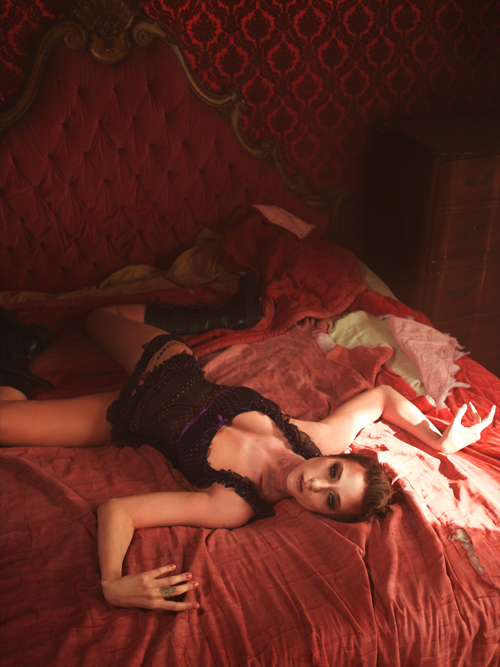
Do I really need to go into the physical realities of the above strangulation? The burst red vessels in the eyes caused by petechial haemorrhages where the blood is forced into delicate tissues due to the strangulation and unable to leave, the tongue lolling out of the mouth just as much as the eyes protrude, the possible voiding of excrement onto the sheets?
And interestingly it’s not the only ‘death’ based shoot created by ANTM; they even used coffins and graves to depict the Seven Deadly Sins:
Death really isn’t pretty but the idealisation of it is nothing new. Fashion shoots are considered art and art has been around as long as we have. The Pre-Raphaelites in the Victorian era idealised tragic females such as The Lady of Shallot and Ophelia in a similar way to those in the recent VICE shoot. And I’ll never forget the serene and somehow sparkling and radiant image of the ill-fated Laura Palmer in Twin Peaks who only found release from a nightmarish existence through death.

In fact if anyone was known to fetishise death it was the Victorians with their elaborate mourning attire and death-etiquette. But the difference seems to be that they didn’t glorify violent death, and men became objects to be mourned just as much as women did (unlike in this current trend). Ultimately the fetishization of the corpse is nothing new and I will be discussing some of the reasons why throughout the course of this blog. One of the many cultural factors does seem to be a desire for discussion of the realities of death. There is clearly a curiosity there, an obvious need for a cathartic release, and only open consideration of the topic will help to dispel the myths. These pictures aren’t real. In her study of death and femininity “Over Her Dead Body”, Elizabeth Bronfen argues that the beautiful, alluring dead are figures of fear and desire for death projected onto the body of the female other and that the “aestheticization and eroticization of the female corpse isn’t the rare product of an aberrant or minority perverse taste, but a privileged trope of Western art in the modern period”. Clearly a more complex issue than originally thought.
 www.carlavalentine.co.uk